


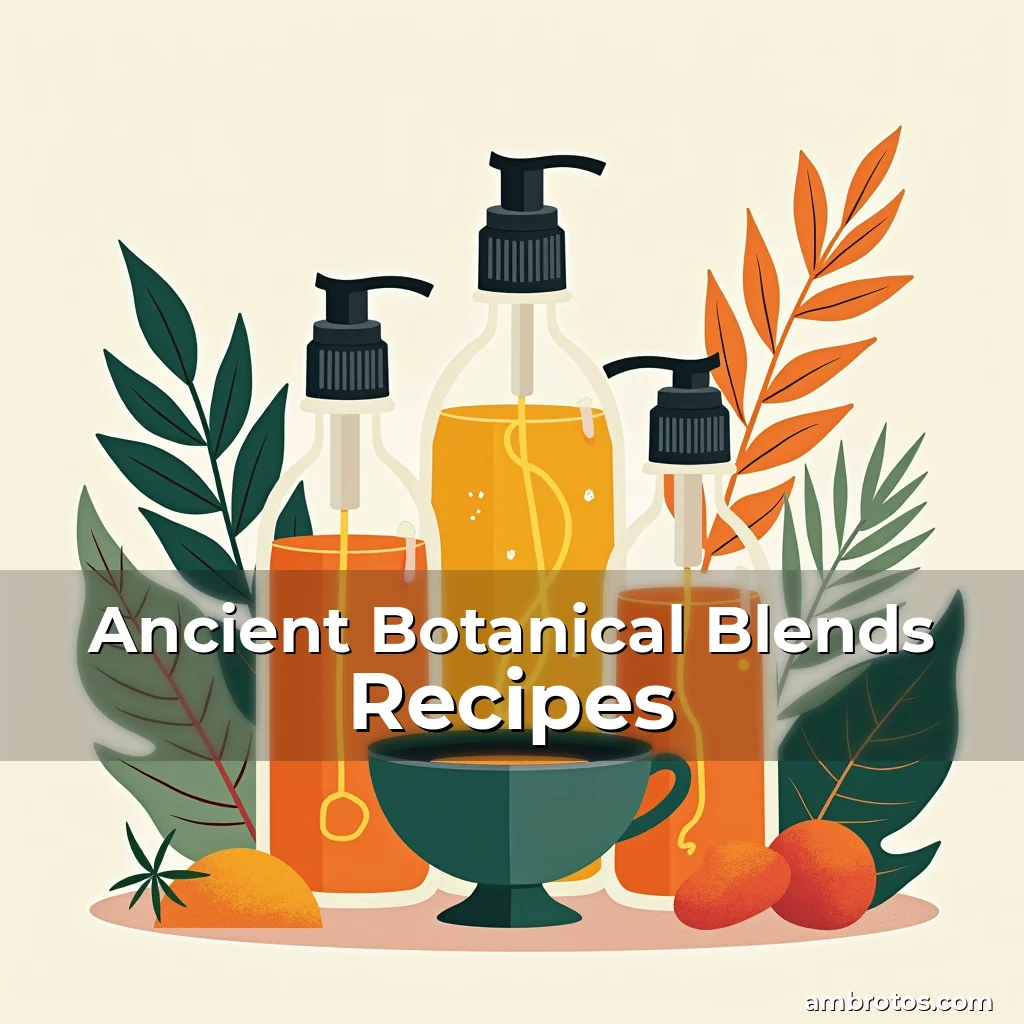
Ancient Botanical Blends Recipes
In an era where modern wellness trends often overshadow traditional practices, ancient botanical blends offer a fascinating glimpse into the sophisticated knowledge systems developed by early civilizations. These formulations were not merely medicinal but represented cultural expressions rooted in spiritual beliefs, environmental understanding, and empirical observation.
The study of these historical plant mixtures reveals how diverse societies across time have harnessed nature’s pharmacy to address physical ailments, enhance mental clarity, and promote holistic well-being. By revisiting these age-old recipes, we can uncover practical applications that remain relevant today while honoring ancestral wisdom.
The Origins of Botanical Alchemy
Dating back thousands of years, the practice of combining plants for therapeutic purposes was foundational to many ancient cultures. From Mesopotamian clay tablets detailing herbal prescriptions to Egyptian papyri listing complex plant-based remedies, evidence suggests that these methods were meticulously documented and refined over generations.
Civilizations such as the Sumerians, Greeks, and Chinese developed extensive pharmacopoeias based on observational data rather than theoretical speculation. Their approach blended scientific inquiry with philosophical frameworks, creating a holistic view of health that considered mind-body connections alongside environmental factors.
- Sumerian contributions: Early records from around 2600 BCE show systematic classification of herbs used for pain relief, digestive issues, and skin conditions
- Egyptian innovations: The Ebers Papyrus contains over 800 formulas using combinations of myrrh, frankincense, and honey for various ailments
Botanical Knowledge Across Continents
The transmission of botanical knowledge occurred through trade routes connecting distant regions, resulting in cross-cultural exchanges that enriched medical traditions worldwide. Silk Road merchants carried not only goods but also healing secrets between Asia, the Middle East, and Europe.
This exchange led to hybridization of practices – for example, Ayurvedic principles influencing Greek medicine while Arabic scholars preserved and expanded upon classical texts during the Islamic Golden Age. Such interactions created a rich tapestry of complementary approaches to plant-based healing.
The Role of Monasteries in Preserving Herbs
During medieval times, European monastic communities became crucial custodians of botanical knowledge. They maintained herb gardens, compiled medical manuscripts, and practiced distillation techniques that would later influence pharmaceutical development.
Monks at places like Monte Cassino and Saint Gallus systematically recorded hundreds of plant species along with their properties and preparation methods. This meticulous documentation ensured continuity despite periods of political instability and religious upheaval.
Fundamental Principles Behind Ancient Formulations
Ancient practitioners followed precise guidelines when selecting and combining ingredients. They understood synergistic effects, knowing that certain pairings enhanced potency while others could neutralize each other’s benefits.
For instance, Hippocrates emphasized balance in treatment regimens, recommending combinations that addressed both symptoms and underlying causes. His teachings laid groundwork for what would become known as personalized medicine centuries before its modern revival.
These early scientists employed trial-and-error experimentation guided by keen observational skills. They tracked patient responses to different mixtures, refining formulas through iterative testing rather than relying solely on superstition or dogma.
The concept of humoral theory played a significant role in shaping prescription logic. Practitioners believed in maintaining equilibrium among bodily fluids (blood, phlegm, black bile, yellow bile), which influenced ingredient selection based on elemental affinities.
Notable Historical Botanical Mixtures
Among the most renowned ancient formulations is the “Four Thieves Vinegar,” whose origins trace back to Renaissance France. Legend claims this blend protected individuals from plague outbreaks due to its antiseptic qualities derived from aromatic woods and spices.
Though its exact composition remains debated, typical elements include cloves, rosemary, lavender, and garlic steeped in vinegar. Modern research supports some antimicrobial properties attributed to these components, suggesting potential value in natural disinfectants.
Similarly, Traditional Chinese Medicine has long utilized formulae like Xiao Yao San, a combination of Bupleurum, Peony Root, and Licorice Root designed to harmonize liver function and alleviate emotional distress. Contemporary studies continue validating its efficacy in managing stress-related disorders.
India’s Ayurveda system produced numerous powerful tonics, including Triphala Churna – a mixture of three fruits (Amalaki, Bibhitaka, Haritaki) revered for detoxifying properties and supporting digestion. Clinical trials confirm its prebiotic effects and antioxidant capacity.
Techniques Used in Preparation
The preparation methods varied widely depending on regional customs and available resources. Common techniques included decoction (boiling roots and bark), infusion (steeping leaves in hot water), tincturing (soaking in alcohol), and fermentation processes.
Each method extracted different compounds from plants, determining bioavailability and duration of effect. For example, decoctions were preferred for extracting minerals from hardy plant parts, while infusions maximized volatile oils from delicate flowers and leaves.
Pottery vessels played essential roles in storage and transportation of prepared medicines. Clay containers helped maintain stability of heat-sensitive compounds, preserving potency during extended journeys along trade networks.
Some advanced civilizations mastered distillation techniques, allowing separation of active constituents without destroying sensitive chemical structures. Distilled essences enabled creation of potent concentrates suitable for external application or internal consumption.
Symbolism and Spiritual Dimensions
Beyond their physiological impacts, many ancient blends held profound symbolic meanings tied to cosmological views. Ingredients were chosen not only for biochemical activity but also because they embodied specific energies or correspondences according to prevailing worldviews.
In Greco-Roman tradition, plants were classified under elemental categories (fire, earth, air, water). A healer might combine fire-associated cinnamon with earth-bound chamomile to create a remedy balancing opposing forces within the body.
Spiritual rituals frequently incorporated botanicals as offerings or conduits between realms. Incense made from resins and dried flowers served dual purposes – purifying spaces and facilitating communication with unseen entities in shamanic ceremonies.
This integration of material and metaphysical aspects meant that healing was viewed holistically, addressing not only biological needs but also psychological and spiritual dimensions of human existence.
Modern Relevance and Scientific Validation
Contemporary science continues uncovering mechanisms behind ancient remedies once dismissed as mere folklore. Research institutions now analyze traditional preparations using chromatography, spectroscopy, and molecular modeling techniques to identify active compounds responsible for observed effects.
Studies have confirmed anti-inflammatory actions in turmeric curcumin, neuroprotective properties of ginkgo biloba, and analgesic potentials found in willow bark extracts. These findings validate longstanding uses of individual herbs while highlighting opportunities for synergy in combined formulations.
Pharmaceutical companies are increasingly collaborating with ethnobotanists to explore indigenous knowledge bases. Such partnerships help bridge gaps between traditional wisdom and clinical validation required for regulatory approval of new therapies.
However, ethical considerations must accompany these investigations. Proper acknowledgment of source communities’ intellectual property rights becomes critical when commercializing historically developed treatments.
Crafting Your Own Botanical Blend
Creating your own ancient-inspired botanical blend begins with thorough research into traditional formulations respected across cultures. Choose base ingredients known for safety profiles and compatibility with intended purposes.
Gather high-quality organic materials sourced seasonally whenever possible. Freshness significantly affects potency, so prioritize locally grown options unless specified otherwise in historical references you’re following closely.
Experimentation requires patience – begin with small batches and observe reactions carefully. Document results meticulously since even minor adjustments can alter effectiveness dramatically depending on ratios used.
Consider consulting professionals experienced in herbal medicine before consuming any self-prepared concoctions. Professional guidance helps ensure proper dosages and prevents potential adverse interactions with existing medications.
Preservation Techniques Through Time
Throughout history, people devised ingenious ways to extend shelf life of their precious botanical creations. Methods ranged from simple drying procedures to elaborate preservation techniques involving salt, sugar, wax, or alcohol.
Dried herbs retained much of their potency if stored properly in cool, dark environments away from moisture sources. Some cultures sealed them inside animal bladders or ceramic jars coated with beeswax to prevent oxidation degradation.
Alcoholic tinctures proved particularly effective at preserving volatile compounds. Spirits acted as solvents capturing essential oils that would degrade rapidly in aqueous solutions exposed to oxygen exposure.
Fermentation offered another dimension – controlled microbial action transformed raw materials into probiotic-rich substances beneficial for gut microbiomes while enhancing flavor profiles naturally.
Legacy of Ancient Wisdom Today
The enduring legacy of these ancient botanical blends lies in their ability to inspire innovation while respecting ecological limits. As global interest grows in sustainable living, there’s renewed appreciation for low-impact, resource-efficient approaches embedded in traditional practices.
Herbal medicine offers alternatives to synthetic drugs with fewer side effects, aligning with contemporary movements toward integrative healthcare models that value preventive care over reactive treatment strategies.
Moreover, studying historical formulations provides insight into biodiversity conservation efforts. Recognizing the importance of genetic diversity within plant populations informs better stewardship practices protecting endangered species crucial to future drug discovery endeavors.
By embracing this inherited knowledge responsibly, we honor our ancestors’ ingenuity while paving pathways for tomorrow’s healers who may yet discover cures hidden within nature’s vast botanical library.
Conclusion
The exploration of ancient botanical blends unveils a remarkable fusion of science, spirituality, and survival instinct woven into every leaf and root. These timeless formulations represent humanity’s enduring quest to understand and harness the natural world for healing purposes.
To engage meaningfully with this heritage, consider starting with basic experiments using safe, commonly available herbs. Document your observations diligently and share experiences respectfully within communities dedicated to exploring natural medicine safely and ethically.


news is a contributor at Ambrotos.com. We are committed to providing well-researched, accurate, and valuable content to our readers.
You May Also Like

Healing Inspired by Nature
Healing Inspired by Nature In an age where technology often dominates our lives, there's growing interest in reconnecting with the...
Art Inspired by Nature
The Living Canvas: Artistic Inspirations from Earth's Wonders In an age where artificiality often overshadows authenticity, artists have turned back...
Nourishing Rituals for Self-Care
The Sacred Art of Nourishing Rituals: Cultivating Holistic Well-being Through Mindful Practices In today's fast-paced world, nourishing rituals have emerged...
Mindful Nourishment Food Choices
Cultivating Consciousness at the Table: A Journey into Mindful Nourishment In an era dominated by fast food culture, screen-filled distractions,...