


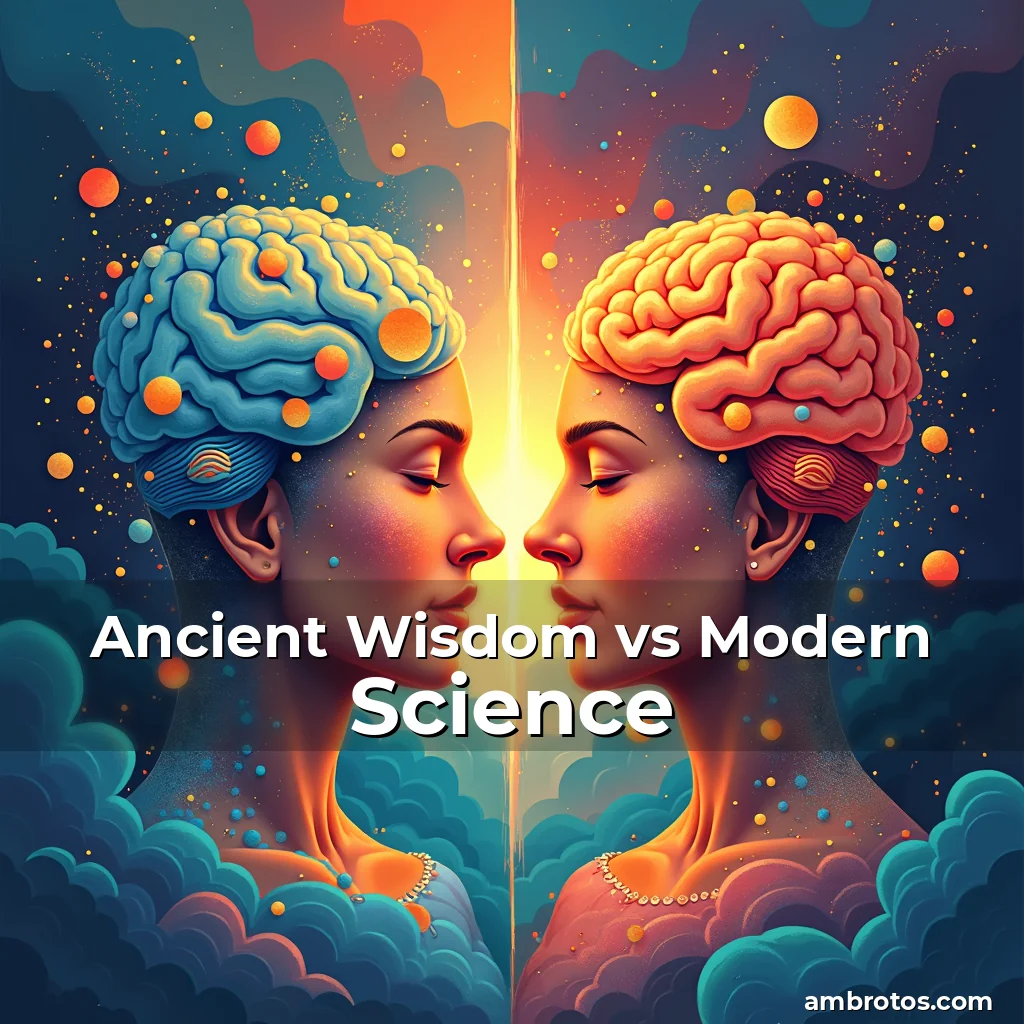
The Eternal Dialogue Between Ancient Wisdom and Modern Science
In an era dominated by technological advancements and scientific breakthroughs, the enduring relevance of ancient wisdom offers a compelling counterpoint. This exploration delves into how timeless philosophies from civilizations such as Greece, India, Egypt, and China continue to resonate today.
While modern science seeks empirical validation through experimentation and data analysis, ancient traditions often emphasize intuitive understanding and holistic approaches to knowledge. Their synergy reveals profound lessons for contemporary challenges ranging from mental health to environmental sustainability.
The Philosophical Foundations of Ancient Thought
Greek philosophers laid the groundwork for Western intellectual tradition through their inquiries into ethics, metaphysics, and epistemology. Socrates’ method of questioning remains foundational in critical thinking education across disciplines worldwide.
Aristotle’s concept of eudaimonia, or human flourishing, continues influencing positive psychology research today. His emphasis on character development aligns closely with modern understandings of emotional intelligence and well-being.
Plato’s allegory of the cave provides a powerful metaphor for cognitive biases that still affect decision-making processes in both personal and professional contexts. The idea that our perceptions shape reality resonates strongly with modern neuroscience findings about brain plasticity.
- Heraclitus’ principle of change (“everything flows”) finds new relevance in climate change discussions, emphasizing adaptability over static solutions
- Parmenides’ paradoxes about existence challenge quantum physics theories regarding particle behavior at microscopic levels
- Pythagoras’ mathematical harmonics prefigured later developments in acoustics and music theory with remarkable accuracy
Spiritual Traditions and Scientific Inquiry
Buddhist teachings on mindfulness have gained significant traction within clinical settings for treating anxiety disorders and PTSD. Mindfulness-based stress reduction programs are now standard practice in many healthcare systems globally.
Vedic mathematics from Indian scriptures contains algorithms that parallel modern computational methods developed centuries later. These include complex geometric proofs and numerical patterns still used in advanced engineering fields.
Meditative practices originating in Tibetan monasteries show measurable effects on brainwave activity when studied using EEG technology. Researchers have identified increased gamma wave production associated with enhanced cognitive function during meditation states.
Traditional Chinese medicine principles surrounding qi energy flow demonstrate surprising correlations with recent discoveries about bioelectric signaling pathways in cellular communication networks.
Egyptian Contributions to Knowledge Systems
Pharaonic engineers demonstrated sophisticated understanding of astronomy long before telescope development. Alignment of pyramids with celestial bodies reflects precise astronomical calculations that remain subjects of scholarly debate today.
The Edwin Smith Papyrus documents medical procedures dating back to 1600 BCE that surprisingly exhibit anatomical accuracy comparable to early Renaissance surgical texts. Techniques for wound treatment and bone fractures show remarkable prescience.
Dream interpretation methodologies developed by Egyptian priests bear striking similarities to current neuroscientific models explaining REM sleep functions and subconscious processing mechanisms.
Mathematical achievements in the Rhind Papyrus reveal an advanced grasp of fractions and geometry that would not be systematically formalized until millennia later in Euclidean works.
Cultural Cross-Pollination Through Trade Routes
The Silk Road facilitated exchanges between Eastern and Western thought systems that shaped global intellectual history. Transmission of papermaking techniques from China to Europe revolutionized information dissemination and literacy rates worldwide.
Islamic scholars preserved and expanded upon Greek philosophical texts during the medieval period, creating a bridge between classical antiquity and the European Enlightenment. House of Wisdom translations made key works accessible to future generations.
Cross-cultural fertilization of ideas led to innovations like algebra which combined Babylonian arithmetic with Greek geometric principles. These syntheses formed the foundation of modern mathematics curricula.
Medical knowledge transfer along trade routes resulted in hybrid healing systems that integrated herbal remedies from different regions, forming the basis of traditional medicine systems still practiced today.
Modern Applications of Timeless Principles
Principles from Daoist philosophy about non-interference find practical application in ecological conservation strategies. Concepts like Wu Wei (non-action) inform sustainable management approaches that prioritize natural equilibrium over aggressive interventionism.
Taoist yin-yang symbolism has influenced design thinking in architecture and urban planning, promoting balance between built environments and nature. This duality manifests in green building certifications requiring ecosystem integration.
Confucian values of respect and hierarchy continue shaping corporate cultures and organizational structures in East Asian societies. These principles underpin leadership training programs focused on relational harmony rather than individualistic competition.
Kabbalistic numerology concepts have intriguing parallels with string theory in physics, suggesting possible connections between esoteric spiritual frameworks and fundamental physical laws governing the universe.
Evidence-Based Validation of Ancient Practices
Rigorous scientific studies increasingly validate effectiveness of ancient wellness practices once dismissed as mere folklore. Research confirms benefits of yoga postures for chronic pain management and spinal alignment issues.
Herbal formulations documented in Ayurvedic texts have undergone pharmacological testing revealing active compounds with anti-inflammatory properties similar to synthetic drugs currently in use.
Evidence-based validation extends beyond health care. Archaeoastronomy analyses confirm that megalithic monuments were constructed with precise astronomical alignments, demonstrating sophisticated observational skills absent from conventional historical narratives.
Neuroimaging studies show that chanting mantras activates specific neural circuits related to attention regulation and emotional stability, providing biological plausibility for claims about meditative efficacy.
Integrating Ancient Insights Into Contemporary Contexts
Architectural designs inspired by ancient Vastu Shastra principles incorporate directional elements that enhance spatial awareness and psychological comfort in modern buildings. These considerations influence biophilic design trends emphasizing natural light and ventilation.
Urban planners drawing from Roman infrastructure models implement durable construction materials and efficient drainage systems that reduce maintenance costs and environmental impact in contemporary cities.
Philosophical inquiry persists in digital age debates. Discussions around AI ethics echo Stoic concerns about virtue and rationality, while social media dynamics reflect Plato’s worries about misinformation and truth-seeking behaviors.
Educational institutions integrating ancient pedagogical methods report improved student engagement, particularly when combining experiential learning with theoretical instruction rooted in classical traditions.
The Future of Synthesizing Old and New Knowledge
Ongoing interdisciplinary collaborations between scientists and historians uncover hidden dimensions of ancient knowledge systems previously unrecognized due to cultural biases in academic evaluation.
New analytical tools enable decoding of ancient manuscripts containing lost scientific knowledge that could inspire innovative solutions to present-day problems facing humanity.
Interdisciplinary synthesis promises transformative potential. Fusion of ancient agricultural practices with modern biotechnology may yield resilient crop varieties capable of thriving in changing climatic conditions without relying solely on chemical interventions.
As we face unprecedented global challenges, revisiting ancient wisdom alongside cutting-edge science offers promising avenues for developing holistic approaches to pressing issues affecting all aspects of life on Earth.
Conclusion
The dialogue between ancient wisdom and modern science reveals a complementary relationship where each enriches the other’s understanding of the world. Rather than existing in opposition, these two domains form part of a continuous intellectual evolution spanning millennia.
To engage meaningfully with this synthesis, individuals can begin by exploring core tenets of various ancient traditions while remaining open to evidence-based verification. Such balanced approach allows us to benefit from time-tested insights without compromising scientific rigor.


news is a contributor at Ambrotos.com. We are committed to providing well-researched, accurate, and valuable content to our readers.
You May Also Like


Cultural Traditional Plant Foods Recipes
The Living Legacy of Traditional Plant-Based Diets Across Cultures In an era where processed convenience often dominates our plates, traditional...
Modern Science Meets Roots of Wellness
Modern Science Meets Roots of Wellness In an era where modern life often pulls us away from our ancestral ways,...


The Harmonious Path: Exploring Holistic Traditions Across Cultures and Time
The Harmonious Path: Exploring Holistic Traditions Across Cultures and Time Holistic traditions encompass ancient wisdom that views health as an...

Whole Food Plant-Powered Living
The Transformative Power of Whole-Food, Plant-Based Living In an era where health consciousness is at its peak, whole-food plant-based living...