The Living Legacy of Organic Heritage: Preserving Timeless Wisdom Through Traditional Knowledge
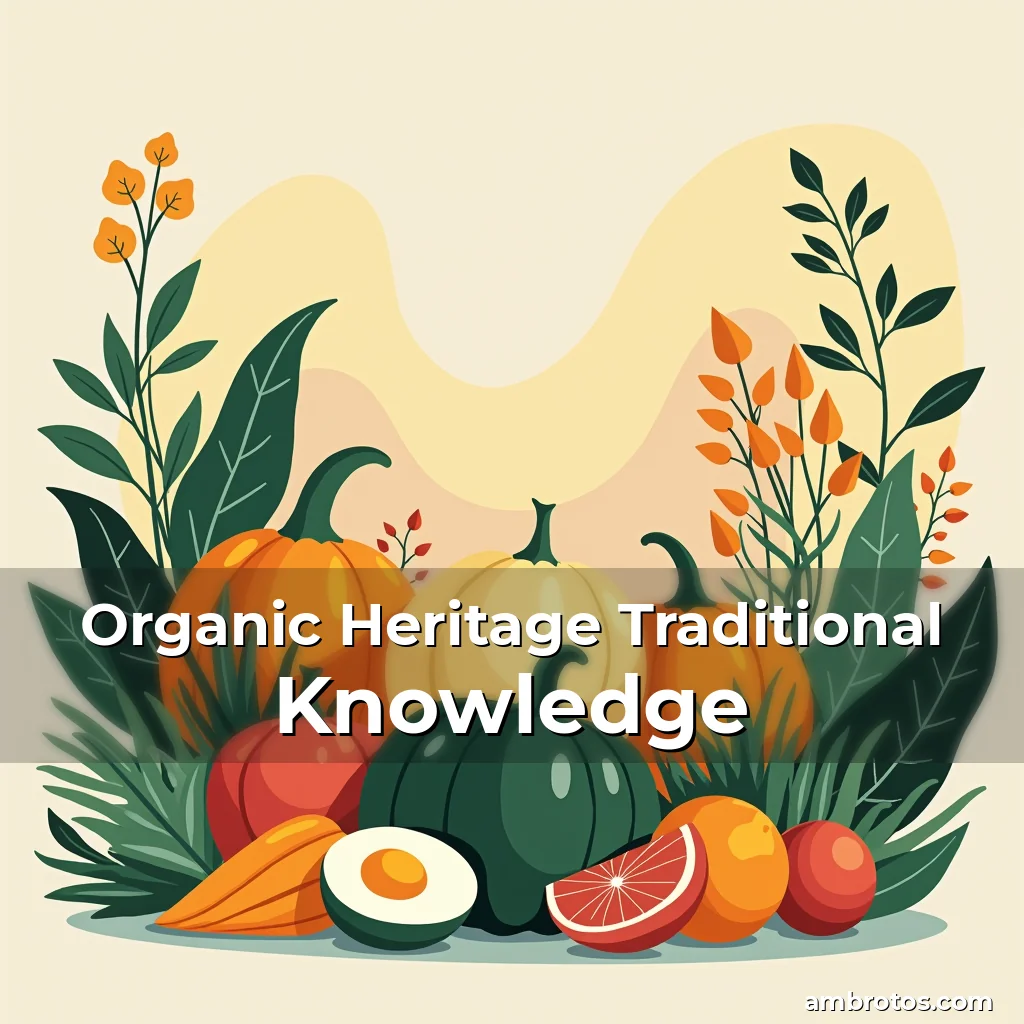
In an era dominated by industrial agriculture and synthetic interventions, the concept of organic heritage stands as both a refuge and a revolution. This is not merely about avoiding chemicals; it’s about reconnecting with the ancient wisdom that has sustained communities across generations. For the Ambrosia Collective and those who value traditional knowledge, understanding organic heritage means embracing practices rooted in ecological balance and cultural continuity.
At its core, organic heritage represents a holistic approach to life—one where human activity harmonizes with nature rather than disrupts it. It encompasses everything from seed saving techniques passed down through centuries to indigenous methods of soil enrichment using local flora. These traditions are far more than nostalgic relics; they form the bedrock upon which sustainable futures can be built today.
Understanding the Roots of Organic Heritage
The origins of organic heritage stretch deep into history, predating modern agricultural systems by millennia. Ancient civilizations such as the Mayans, Egyptians, and Chinese developed sophisticated farming techniques long before the advent of chemical fertilizers and genetically modified crops. Their methods were guided by observations of natural cycles and respect for biodiversity—principles still relevant in contemporary discussions around sustainability.
Cultures worldwide have preserved their agricultural knowledge through oral traditions, rituals, and hands-on practice. In many regions, elders serve as living libraries, transmitting invaluable information about plant behavior, animal husbandry, and land stewardship. This intergenerational transfer ensures that each generation builds upon the foundations laid by those who came before them.
- Seed Saving: A fundamental aspect of organic heritage involves preserving native seeds. By collecting and storing seeds from successful harvests, farmers ensure genetic diversity while adapting plants to local climates over time.
- Natural Pest Control: Instead of relying on harmful pesticides, traditional societies employed companion planting, beneficial insects, and herbal remedies to maintain healthy ecosystems without disrupting food chains.
These foundational practices illustrate how early agriculturalists achieved remarkable yields without depleting resources. They understood that true fertility comes not from external inputs but from nurturing relationships within the ecosystem itself. Today’s resurgence in interest toward these age-old methods reflects growing awareness of environmental degradation caused by conventional farming practices.
As we explore further into what constitutes organic heritage, it becomes clear that it extends beyond mere cultivation techniques. It embodies values, philosophies, and ways of life that prioritize harmony between humanity and nature. Let us now examine how these principles manifest specifically within various global cultures.
Global Expressions of Organic Heritage
Different parts of the world have cultivated distinct forms of organic heritage based on geography, climate, and available resources. From Andean terraces carved into mountainsides to rice paddies in Southeast Asia, every region holds unique examples of sustainable land use shaped by ancestral knowledge.
In India, Ayurveda offers a profound system integrating medicine with agriculture. Practices like crop rotation and vermiculture align seamlessly with health philosophy, creating self-sustaining environments where wellness supports productivity. Similarly, Japan’s Satoyama landscape exemplifies coexistence between villages and forests through careful management strategies honed over centuries.
Indigenous peoples across North America employ rotational hunting grounds alongside controlled burns to rejuvenate landscapes naturally. These methods prevent overexploitation while maintaining habitat integrity—a stark contrast to monoculture practices prevalent in modern agribusiness models.
African homesteads often feature diverse gardens combining staple foods with medicinal herbs grown together under shade trees. Such polycultural arrangements mimic forest structures, enhancing resilience against pests and diseases while maximizing nutritional output per square meter.
This rich tapestry of regional approaches underscores a universal truth: when people live in accordance with their environment’s rhythms, they create thriving communities capable of enduring change without compromising future generations’ needs.
Traditional Knowledge Systems in Agriculture
Traditional knowledge systems encompass much more than simple farming tips—they represent entire frameworks guiding daily existence according to nature’s laws. Many Indigenous groups possess intricate calendars marking seasonal shifts that inform planting schedules, migration patterns of wildlife, and optimal times for harvesting wild edibles.
For instance, among the Quechua people of Peru, lunar phases dictate sowing dates for potatoes—an essential crop adapted uniquely to high-altitude conditions. These celestial markers help synchronize agricultural activities with climatic variations ensuring stable yields despite unpredictable weather events common at elevation levels.
Similarly, Aboriginal Australians utilize Dreamtime stories embedded with geographical data about water sources, edible plants, and safe travel routes through arid landscapes. Such narratives function simultaneously as spiritual teachings and practical guides crucial for survival in harsh environments.
Modern science increasingly recognizes the validity behind these empirical observations collected through direct experience spanning thousands of years. Researchers collaborate with local experts to document findings that might otherwise remain undocumented due to lack of written records or institutional support.
However, there remains significant work ahead regarding documentation efforts aimed at safeguarding endangered knowledge sets threatened by globalization trends eroding traditional lifestyles. Protecting linguistic diversity also plays a vital role since many agricultural terms exist only within specific dialects making translation challenging yet necessary for wider appreciation.
Efforts towards formalizing traditional knowledge include establishing repositories containing audio recordings, visual demonstrations, and textual summaries compiled by ethnobotanists working closely alongside custodianship communities. These initiatives aim not only to preserve but also promote cross-cultural learning opportunities benefitting both scholars and practitioners alike.
By acknowledging the depth and complexity inherent in traditional knowledge systems, society moves closer toward valuing ancestral wisdom as legitimate scientific contributions deserving equal recognition alongside Western methodologies.
Eco-Friendly Farming Techniques Across Cultures
Variations in eco-friendly farming techniques emerge from localized adaptations addressing specific challenges faced by different populations. While some communities rely heavily on water conservation measures others develop ingenious solutions tailored precisely to their surroundings.
In arid zones like Rajasthan, India, johads—traditional rainwater harvesting structures—are constructed using locally sourced materials enabling efficient collection during monsoon seasons. These earthen dams provide irrigation throughout dry periods significantly improving crop viability compared to unregulated rainfall patterns alone.
Mesoamerican civilizations pioneered milpa systems involving three-component rotations featuring maize, beans, and squash. This polyculture arrangement enhances nutrient cycling reduces pest infestations while providing balanced diets containing protein carbohydrates and vitamins respectively.
African farmers cultivate fallows strategically allowing depleted soils ample recovery time prior to replanting. Intercropping legumes helps replenish nitrogen levels naturally eliminating dependency on artificial fertilizers altogether thereby reducing input costs substantially.
Such innovative strategies highlight ingenuity present within diverse cultural contexts proving once again that effective resource management does not require expensive technologies nor extensive training programs—it simply demands respect for nature’s processes combined with willingness to learn continuously from lived experiences.
Despite widespread adoption globally few governments actively incorporate these proven methods into national policies promoting regenerative agriculture instead favoring subsidies linked predominantly to chemically intensive production models which ultimately undermine long term soil health objectives.
Advocates argue compellingly that transitioning away from extractive economies necessitates reimagining education curricula emphasizing place-based learning reinforcing connections between students’ personal histories and broader environmental issues affecting their immediate vicinity.
The Role of Biodiversity in Organic Heritage
Biodiversity lies at the heart of organic heritage, serving as both indicator and enabler of resilient agricultural systems. Unlike industrial farms cultivating uniform monocultures vulnerable to disease outbreaks, traditional practices emphasize varied species interactions fostering robustness against external shocks.
Polyculture systems typically integrate several complementary crops sharing mutual benefits including pest deterrence shading effects moisture retention capabilities etc. This multifunctional design mimics natural ecosystems where no single organism dominates entirely leading to greater stability overall.
Terraced fields found along mountainous regions demonstrate another dimension of biodiversity management through microhabitats created intentionally for particular plant varieties requiring specific temperature ranges humidity levels etc. Such engineered landscapes reflect intimate knowledge about topography coupled with precise timing considerations influencing success rates considerably.
Moreover, reliance on heirloom varieties contributes immensely towards preserving genetic material absent elsewhere potentially useful traits may become critical assets confronting emerging threats posed by climate fluctuations pathogens invasive species etc.
Pollinators play indispensable roles too facilitating reproduction across numerous flowering plants whose fruits constitute primary dietary staples for millions globally. Conservation efforts targeting pollinator habitats thus represent indirect investments securing continued access to nutritious food supplies sustainably harvested without resorting to destructive extraction techniques harming delicate ecological balances everywhere.
Recognizing interconnected dependencies within complex webs supporting life above ground below ground surface level etc reinforces urgency surrounding preservation missions undertaken nowadays especially considering accelerating losses experienced recently attributed primarily to habitat fragmentation pollution overexploitation factors largely avoidable via adopting alternative pathways prioritizing regeneration over depletion.
Community-Based Approaches to Sustainability
Sustainability thrives most effectively when nurtured collectively rather than imposed externally. Community-based initiatives leverage shared responsibilities strengthening bonds between individuals families neighborhoods while achieving tangible improvements impacting quality of life metrics positively.
Cooperatives formed amongst smallholder producers enable pooling resources acquiring equipment negotiating better prices accessing markets previously inaccessible due limited capital constraints restricting growth potential severely hindering competitive positions vis-a-vis larger enterprises dominating supply chains extensively.
Local governance bodies empowered sufficiently can enact regulations protecting communal lands preventing encroachment by commercial interests exploiting loopholes perpetuating unsustainable exploitation patterns detrimental to public welfare indefinitely unless counteracted decisively through informed civic engagement mechanisms transparent decision-making procedures inclusive representation structures etc.
Education institutions collaborating directly with grassroots organizations facilitate experiential learning opportunities linking classroom theories practically applied field settings generating mutual reinforcement strengthening conceptual understandings grounded firmly reality rather abstract notions detached actualities.
Furthermore digital platforms emerged recently connecting urban dwellers rural counterparts exchanging skills goods services digitally bridging spatial divides fostering solidarity networks transcending geographic boundaries expanding reach exponentially compared conventional face-to-face exchanges constrained logistical limitations inherently associated physical proximity requirements.
These collaborative endeavors underscore importance investing trust empowering agents closest situations best equipped navigating complexities arising therein successfully resolving problems arising inevitably whenever attempting implement changes aiming enhance livability indices holistically addressing social economic environmental dimensions concurrently.
Preservation Challenges Facing Organic Heritage
Despite undeniable merits attached practicing organic heritage considerable obstacles impede its proliferation threatening erosion irreversible loss occurring steadily currently. Principal adversaries include diminishing incentives stemming commodification pressures undermining intrinsic motivations driving voluntary participation initially characterizing early adopters enthusiastically engaged pursuits aligned ethical convictions personal identities tied deeply ancestral lineages.
Market forces distort priorities steering attention artificially inflated returns generated through rapid turnover cycles demanding constant innovation pushing aside slower yielding alternatives deemed economically inefficient irrespective ecological advantages accrued thereof. Resulting disparities widen gaps separating affluent sectors enjoying privileges afforded technological advances versus marginalized groups lacking sufficient means adapt rapidly changing circumstances appropriately.
Additionally cultural dilution accelerates pace disappearance languages customs rituals fading gradually replaced standardized global norms homogenizing expressions uniqueness giving rise uniformity suffocating creativity stifling evolution stagnation setting stage collapse eventual extinction phenomena witnessed frequently historical precedents cautionary tales warning against blind conformity uncritical acceptance foreign paradigms dislodging authentic roots anchoring meaningful progress securely.
Environmental degradation exacerbates difficulties compounding existing vulnerabilities increasing exposure risks damaging already fragile infrastructures reliant sensitive ecosystems prone destabilization triggered slightest disturbances. Climate variability intensifying extreme weather events heighten unpredictability complicating planning efforts forecasting outcomes accurately becoming increasingly difficult burdening decision-makers tasked managing finite resources efficiently amidst mounting uncertainties.
Legal frameworks sometimes hinder rather assist conservation missions ambiguously defined property rights conflicting interpretations jurisdictional overlaps causing confusion paralysis hampering implementation actions required safeguarding intangible assets embodying irreplaceable heritage worth protecting fiercely.
To overcome these hurdles requires multi-pronged strategy incorporating advocacy policy reform funding allocation technical assistance capacity building measures designed collaboratively stakeholders ensuring equitable distribution benefits derived revitalized systems operating inclusively fairly sustainably benefiting everyone involved directly indirectly affected processes unfolding.
By addressing underlying causes systematically methodically implementing targeted interventions incrementally rebuilding lost momentum restoring vitality enabling revival movements poised flourish once again contributing meaningfully global discourse surrounding sustainable development agendas pursued earnestly genuinely committed transforming aspirations achievable realities demonstrably verifiable successes celebrated widely recognized universally appreciated benchmarks attained consistently maintained going forward.
Future Directions for Organic Heritage Preservation
Looking ahead, the path forward for organic heritage preservation hinges critically on embracing new technologies while honoring timeless wisdom. Innovations in biotechnology offer promising avenues for enhancing traditional practices without compromising their essence. Genetic sequencing, for example, enables scientists to identify drought-resistant strains compatible with heirloom varieties, merging old-world resilience with cutting-edge research.
Simultaneously, advancements in data analytics empower communities to track climate patterns and optimize planting schedules accordingly. By analyzing historical weather data alongside current trends, farmers gain deeper insights into selecting appropriate crops and managing resources efficiently. This fusion of technology and tradition fosters adaptive strategies responsive to evolving environmental conditions.
Yet, technological integration must be approached thoughtfully to avoid overshadowing the very principles that make organic heritage valuable. Digital tools should complement—not replace—the hands-on expertise accumulated over generations. Training programs focused on equipping traditional knowledge holders with tech literacy will ensure these innovations serve as bridges rather than barriers.
Collaborative platforms are emerging that connect indigenous practitioners with researchers, creating spaces for knowledge exchange and joint problem-solving. These partnerships allow for the validation of traditional practices through scientific scrutiny while offering modern perspectives that can refine longstanding methods. Such synergistic relationships enrich both domains, resulting in more holistic solutions applicable globally.
Investment in educational infrastructure is equally vital. Incorporating modules on organic heritage into school curriculums ensures younger generations inherit not only the skills but also the values embedded in these practices. Interactive learning experiences centered around local ecology instill a sense of responsibility toward sustaining the planet’s biodiversity.
Finally, international cooperation plays a pivotal role in amplifying efforts. Sharing best practices across borders allows for the adaptation of successful models to suit diverse contexts. Global summits dedicated solely to discussing organic heritage foster dialogue that translates into concrete commitments and funding allocations directed toward preservation projects worldwide.
Through these strategic directions, the legacy of organic heritage can evolve dynamically, remaining relevant and impactful in shaping a sustainable future. Embracing both innovation and tradition ensures that these invaluable practices continue to thrive, inspiring generations to come.
Conclusion
The journey through the depths of organic heritage reveals a narrative woven intricately with threads of tradition, resilience, and innovation. As we have explored, this heritage is not merely a relic of the past but a vibrant force shaping our collective future. Rooted in the wisdom of countless generations, it provides essential lessons on sustainability, biodiversity, and community-driven approaches to agriculture that resonate profoundly in today’s world.
Embracing organic heritage invites us to recognize the significance of traditional knowledge in fostering ecological balance and cultural continuity. It calls for a conscious effort to preserve these practices, ensuring that they are passed on to future generations who will inherit the mantle of guardianship over our planet’s precious resources. By doing so, we honor the ancestors whose lives were intertwined with the land and acknowledge our responsibility to protect it for those who follow.
Let us take action now! Support local initiatives that champion organic farming and traditional knowledge systems. Engage with your community to share stories, participate in workshops, and advocate for policies that recognize and uplift these practices. Together, we can build a legacy that celebrates the richness of organic heritage and secures a healthier, more sustainable world for all beings.

news is a contributor at Ambrotos.com. We are committed to providing well-researched, accurate, and valuable content to our readers.
You May Also Like