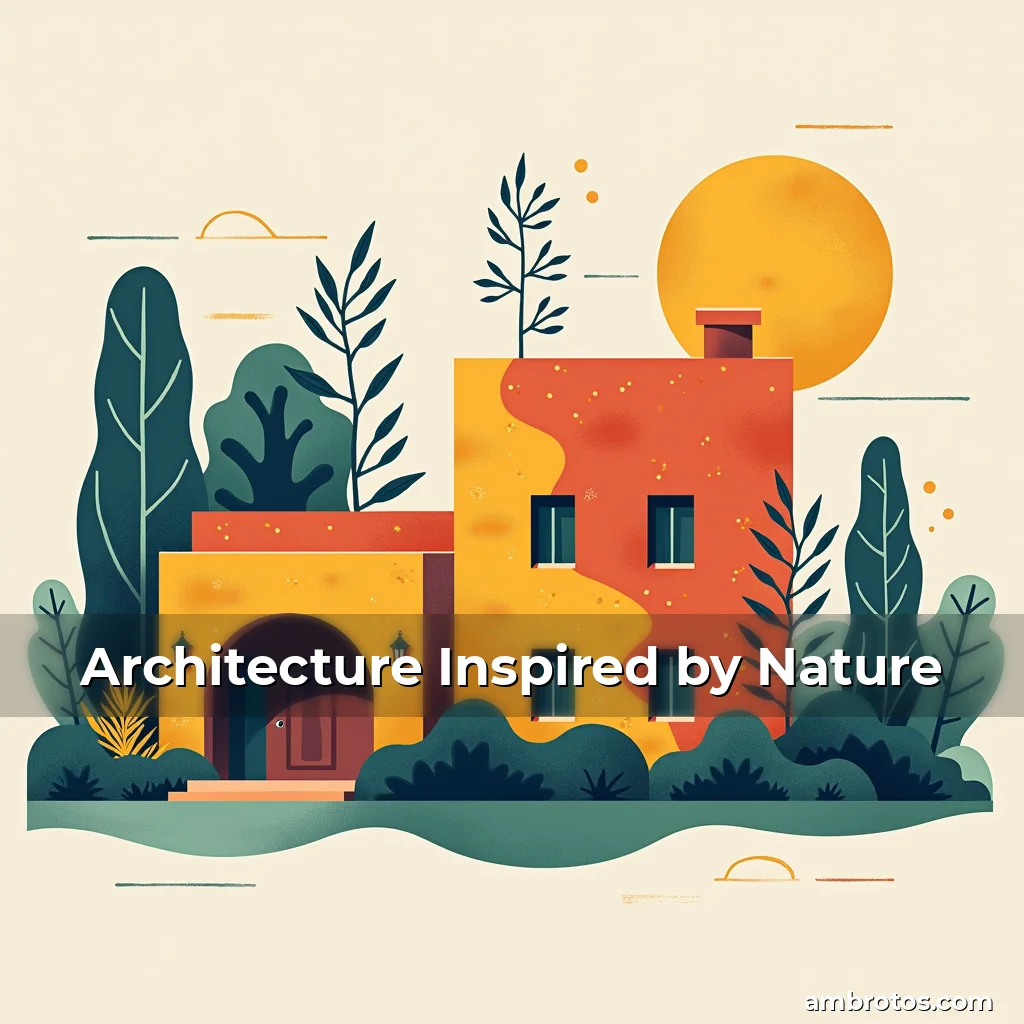
The Living Blueprint: How Architecture Embraces Nature’s Wisdom
In an era where technology often overshadows tradition, architecture is rediscovering its roots in the natural world. From ancient adobe structures that regulate temperature naturally to modern skyscrapers mimicking termite mounds, buildings are becoming living entities that breathe, adapt, and thrive alongside their environments.
This revival isn’t merely aesthetic; it represents a profound shift towards sustainability, resilience, and harmony between human habitation and ecological systems. Architects today are not just constructing spaces but creating ecosystems within concrete jungles.
Nature as the Original Architect
Long before blueprints were drawn, nature had perfected architectural principles through millions of years of evolution. Bees construct hexagonal honeycombs that use minimal materials while maximizing strength and storage space—an efficient model architects have studied extensively for lightweight structural designs.
Likewise, termite mounds demonstrate passive cooling techniques far ahead of contemporary HVAC technologies. These structures maintain stable internal temperatures despite extreme external conditions through intricate air circulation patterns that scientists continue studying to revolutionize building efficiency.
Biophilic design has emerged as a powerful philosophy integrating natural elements into urban settings. By incorporating green walls, indoor gardens, and natural light sources, architects create healthier, more productive spaces that reduce stress and enhance well-being.
- Bamboo, known for its tensile strength comparable to steel, offers sustainable alternatives for construction without depleting forests
- Coral reef-inspired structures can filter water and support marine biodiversity when integrated into coastal infrastructure
The Japanese concept of sabi—appreciating imperfection and transience—has influenced modern biomimetic designs that embrace weathering processes rather than resisting them, leading to longer-lasting, adaptive materials.
Even ancient civilizations understood these principles intuitively. The Indus Valley civilization built cities with sophisticated drainage systems and water conservation methods centuries before similar practices became widespread globally.
Case Studies: Buildings That Live Like Organisms
One remarkable example is Singapore’s Marina One, which features lush vertical gardens that provide insulation, purify air, and create microclimates within the structure. Its central atrium functions similarly to a rainforest canopy, regulating humidity and temperature organically.
Germany’s Vauban district showcases eco-friendly housing developments powered entirely by renewable energy. This car-free neighborhood integrates solar panels, green roofs, and communal spaces designed around natural topography rather than imposed grids.
Biomimicry extends beyond aesthetics to functional aspects too. The Eastgate Centre in Zimbabwe uses ventilation inspired by termite mounds, reducing energy consumption significantly compared to conventional office buildings.
Architects are also reimagining entire neighborhoods using ecological zoning. In Copenhagen, the Sydhavnen district plans integrate stormwater management through permeable pavements and constructed wetlands, transforming what was once industrial wasteland into thriving habitats for both people and wildlife.
The Science Behind Natural Inspiration
Modern science provides rigorous frameworks for translating biological phenomena into architectural solutions. Researchers at MIT’s Media Lab study plant cell structures to develop self-repairing concrete capable of healing cracks autonomously over time.
Biomaterials such as mycelium-based composites offer promising alternatives to plastic and synthetic insulation. These organic materials grow from fungi spores and can be molded into various shapes, providing biodegradable yet durable components for construction.
A team at Stanford University recently developed a type of paint infused with bacteria that absorbs nitrogen dioxide pollutants from the atmosphere—a direct application of microbial processes found in soil purification mechanisms.
Computational biology now enables precise modeling of complex natural geometries. Software tools simulate how tree branches distribute loads efficiently, informing the design of earthquake-resistant structures with fractal-like support networks.
Advancements in material science have led to the creation of smart textiles that change color based on environmental stimuli, mirroring chromatophore cells found in cephalopods like octopuses for dynamic facade shading systems.
Eco-Cities: Urban Planning Redefined by Nature
Urban planners are rethinking city layouts by observing natural landscapes. Trees as infrastructure become essential rather than ornamental elements in new development projects across Europe and Asia.
Mexico City’s Desierto de los Leones National Park demonstrates how preserving natural corridors enhances urban connectivity. This protected area allows wildlife migration paths, maintaining genetic diversity crucial for ecosystem health.
The concept of wildscaping encourages landscaping choices that benefit native species while still serving human needs. This approach reduces maintenance requirements dramatically since local plants require less irrigation and resist pests better than non-native varieties.
Eco-cities incorporate multifunctional spaces that serve multiple purposes simultaneously—such as parks doubling as flood retention basins during heavy rains. These dual-use areas increase land efficiency without compromising ecological integrity.
Newly emerging smart cities utilize AI-driven sensors embedded in roads and sidewalks to monitor foot traffic patterns and adjust lighting levels accordingly, minimizing unnecessary energy waste akin to how animals conserve heat through behavioral adaptations.
Sustainable Materials: Harvesting Innovation from Earth
Natural resources offer sustainable substitutes for resource-intensive building materials. Rammed earth construction, used for millennia in regions like China and Mesopotamia, remains relevant due to its thermal mass properties that absorb daytime heat and release it gradually at night.
Hempcrete has gained popularity as a low-carbon alternative combining hemp fibers with lime binder. It regulates indoor humidity effectively while sequestering carbon dioxide from the atmosphere during production.
Pine bark mulch mixed with recycled plastics forms flexible waterproof membranes ideal for roofing applications. This composite material resists mold growth better than traditional bitumen coatings and lasts decades without needing replacement.
Innovative bioconcrete contains bacteria that produce limestone when exposed to moisture. This self-healing property could drastically extend infrastructure lifespans and reduce long-term maintenance costs associated with concrete degradation.
Researchers explore possibilities with mussel adhesive proteins extracted from seawater mollusks. These substances show potential for developing underwater repair compounds applicable in maritime constructions facing constant erosion challenges.
Community Impact: Bridging Ecological Awareness Through Design
Environmental education becomes tangible through experiential learning opportunities created by nature-inspired architecture. Schools built around central courtyards filled with indigenous flora teach students about local ecology firsthand.
Public spaces featuring interactive installations explain ecological cycles visually. For instance, kinetic sculptures demonstrating wind patterns help visitors understand renewable energy concepts through physical movement rather than abstract lectures.
Communities benefit from increased access to nature through thoughtfully planned layouts. Walkability scores rise dramatically when streets prioritize pedestrian pathways lined with trees instead of dominating automobile-centric designs.
Greenbelts surrounding residential zones act as buffers against pollution while promoting outdoor activities beneficial for mental health. These vegetated zones also serve as informal classrooms where residents learn about native species identification and seasonal changes.
Collaborations between architects and ecologists ensure that every project includes measurable habitat enhancements. For example, installing bat boxes along bridges provides roosting sites without requiring significant modifications to existing infrastructure.
Futuristic Visions: Where Does Nature-Inspired Architecture Go Next?
Ongoing research explores the potential of nano-biomimetics, where nanotechnology replicates microscopic biological processes for advanced applications. Scientists envision self-cleaning surfaces modeled after lotus leaves’ hydrophobic properties already finding limited commercial uses in certain industries.
Genetically modified organisms might eventually contribute to construction fields safely. While controversial, some experiments involve engineered yeast strains producing binding agents that replace toxic chemicals currently used in cement manufacturing.
The integration of artificial intelligence with biomimicry presents exciting frontiers. Machine learning algorithms analyze vast datasets comparing natural forms with mechanical performance metrics to discover optimal hybrid solutions never considered before.
Future cities may feature vertical farms interwoven seamlessly among high-rise buildings, providing fresh food locally while reducing transportation emissions related to agricultural supply chains. These multi-level agrostructures would function as both nourishment providers and climate regulators through evaporative cooling effects.
Living facades composed of photosynthetic organisms could transform building exteriors into oxygen generators while filtering airborne toxins continuously. Such innovations represent a paradigm shift toward regenerative rather than extractive approaches in urban development.
Conclusion
From ancient wisdom to cutting-edge scientific advancements, architecture continues evolving by drawing inspiration from nature’s boundless creativity. Structures are no longer static objects but dynamic participants in ecological systems, contributing positively to planetary well-being.
As we move forward, embracing this symbiotic relationship between human innovation and natural design will determine our ability to build resilient societies capable of thriving amidst environmental challenges. Let us continue learning from Earth’s oldest architects—the plants, animals, and microbes whose silent lessons shape tomorrow’s skylines today.

news is a contributor at Ambrotos.com. We are committed to providing well-researched, accurate, and valuable content to our readers.
You May Also Like